
Today we are seeing climate change in action, increased concentrations of atmospheric greenhouse gases have led to a rise in sea levels, temperatures, and extreme weather patterns. It is an undeniable danger to the entire globe which threatens every individual on the planet. The full extent of the dangers of climate change are yet to be seen, and intervention is urgently required to make positive changes to our planet.
Researchers have acknowledged the pivotal role microorganisms in producing sustainable biofuels, increasing carbon sequestration via soil microbes and reducing methane emissions in landfill sites. By acknowledging the powerful impact applied microbiology can have on our planet, there is the potential to apply this to real world problems such as climate change, to change our world for the better.
Microbial innovation will be vital in moving towards a low carbon economy, creating a healthier and more sustainable planet for the future.
Read the latest research on climate action from AMI’s journals here.
Climate Action Advisory Group Members

Komang Ralebitso-Senior
As the current Associate Dean (Diversity and Inclusion) for the Faculty of Science, I oversee the development, implementation, monitoring and evaluation of the University’s EDI Strategy and Action Plan. Therefore, I facilitate and support an embedding of diversity and inclusion principles into teaching, learning, research and enterprise for an equitable experience for staff and students. I have held post-doctoral positions with: BioMEMS Laboratory of Nanyang Technological University, Singapore; and NERC Centre for Ecology & Hydrology, Oxford (now Wallingford). As Senior Lecturer in Microbial Ecology, my research interests in microbiome science and technology are to understand and exploit complex interacting microbial communities. We achieve this by applying molecular techniques for the analysis of ecosystems that are impacted by decomposition, biochar, pollutants and waste products.
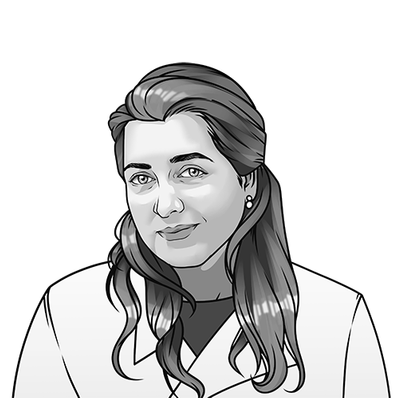
Marta Simões
Marta Filipa Simões currently works at the State Key Laboratory of Lunar and Planetary Sciences (SKLPlanets), Macau University of Science and Technology (MUST), as an assistant professor.
She is a microbiologist with a special interest in astrobiology, astromycology, applied microbiology, and mycology, more specifically filamentous fungi and in culture collections and their management. Previously she worked as a Postdoctoral Fellow, at her current institution. Before that, she was an Associate tutor and a Junior Research Fellow at Edge Hill University (UK), where she did research on microbial characterisation and identification and was responsible for the in-house culture collection. Before that, she worked as a Postdoc at the Computational Bioscience Research Center (CBRC, King Abdullah University of Science and Technology (KAUST) in Saudi Arabia, where she worked with marine microbiology and was also responsible for the management of the bacterial culture collection.

Lisa Stein
Lisa Y. Stein is an American biologist who is a professor at the University of Alberta. Her research considers the microbiology of climate change. She was awarded the 2022 University of Alberta Killam Award for Excellence in Mentoring.
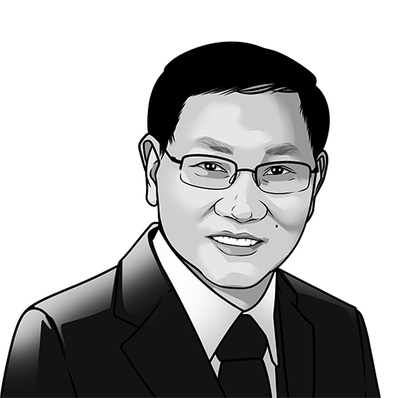
Jizhong Zhou
Dr. Jizhong Zhou is a George Lynn Cross Research Professor and a Presidential Professor in the Department of Microbiology and Plant Biology and Director for the Institute for Environmental Genomics, University of Oklahoma, Norman, OK; Adjunct Senior Scientist at Lawrence Berkeley National Laboratory; and Adjunct Professor at Tsinghua University, Beijing, China. His expertise is in molecular biology, microbial genomics, microbial ecology, theoretical ecology and genomic technologies. His laboratory has pioneered the development and use of genomic technologies for environmental studies for which GeoChip won an R&D 100 Award in 2009. He received a Presidential Early Career Award for Scientists and Engineers in 2001. He is a former Editor for Applied and Environmental Microbiology and an Editor for mBio. He is a Fellow of the American Academy of Microbiology and the American Association for the Advancement of Science.
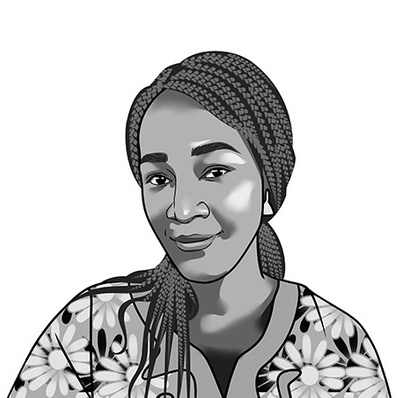
Ogechukwu Chukwuma

Christine Spencer
I am currently a Tutor in Applied Environmental Geology and researcher in biogeotechnics. For the past six years my research has focussed on biocementation, as a means of improving properties of geomaterials. My areas of expertise include soil mechanics, geomicrobiology and geochemistry.

Taniya RoyChowdhury
Dr. Taniya RoyChowdhury is a soil microbiologist who studies soil systems at both the broad ecological scale and the complex microbial scale to assess change and resilience in response to climate change. Microbes play a large role in the carbon cycle, emitting greenhouse gasses and working alongside plants to cycle nutrients. In her recent research, Dr. RoyChowdhury is taking a holistic approach, harnessing the functional potential of the soil microbiome to assess whether adopting sustainable soil management practices leads to improved soil health.
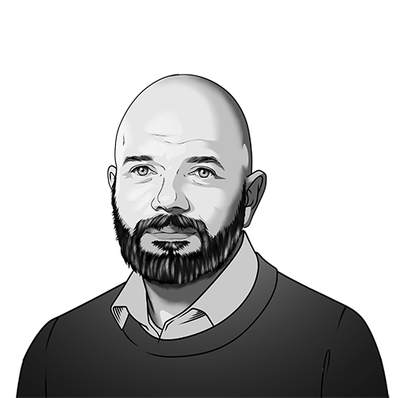
Carsten Suhr Jacobsen
Microbial ecology of soil and groundwater associated bacteria is the main area of my research. I believe that microbial ecology in soil can only be described properly using combinations of molecular methods, biogeochemical techniques and classical microbiology. I have used significant amount of energy on quantification of nucleic acids directly extracted from soil, and I have worked with different methods to quantify mRNA directly in soil. These techniques are being applied in the projects that I've been able to raise funding for.
Microbial degradation of pesticides, PAH compounds and chlorinated compounds in various soils and groundwater aquifers has been the core of my research, but I've also been working on: 1) the study of microbial communities in ice and permafrost samples from Greenland, 2) the study of survival and transport of pathogens from manure to freshwater, 3) the study of side effects of pesticides on agricultural ecosystems services, 4) effect on ash on soil exosystem services and 5) interactions in the rhziosphere microbiome – in all cases exploring the same basic methodologies, i.e. DNA and mRNA based analyses of the microorganisms directly in environmental samples.

Janet Jansson
Janet Jansson is Chief Scientist for Biology in the Biological Sciences Division and a Laboratory Fellow at the Pacific Northwest National Laboratory (PNNL). Jansson has more than 30 years of experience in microbial ecology. Jansson earned an M.S.in Soil Microbiology at Colorado State University (1983) and a Ph.D.in Microbial Ecology at Michigan State University (1988). Jansson was a researcher in Sweden for 20 years from 1988 - 2007 and was Professor, Chair of Environmental Microbiology, and Vice Dean at the Swedish University of Agricultural Sciences prior to moving back to the United States in 2007. Before coming to PNNL in June 2014, Jansson was a senior staff scientist at Lawrence Berkeley National Laboratory (2007-2014). From 2012-2014, Jansson was an adjunct professor at the University of California, Berkeley and at the University of Copenhagen, Denmark.
Jansson's specific expertise is in the use of molecular approaches (omics) to study complex microbial communities, such as those residing in soil, sediments, and the human gut. Jansson is studying the impact of climate change on microbial communities in prairie and arctic ecosystems, including a focus on the impact of warming on permafrost soil microbiomes and drought on grassland soils. Her research also focuses on the human microbiome, including the impacts of diet, host genetics and inflammatory bowel disease on gut microbial functions.

Arpita Bose
Arpita Bose's lab studies microbial metabolisms and their influence on biogeochemical cycling using an interdisciplinary approach. She seeks to generate new ways of addressing issues such as the energy crisis, pollution, biofouling, and sustainability.
Ready to make an impact?
If you would like apply to be involved in an AMI Advisory Group, then please complete the form below. Alternatively, if you would like to more information, please get in touch with info@appliedmicrobiology.org