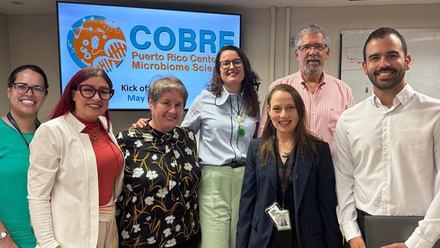
In a transformative leap for science and innovation in the Caribbean, the University of Puerto Rico Medical Sciences Campus (UPR-MSC) has been awarded an $11.3 million NIH-COBRE grant (National Institute General and Medical Sciences) to establish the Puerto Rico Center for Microbiome Sciences (PR-CMS)—the first of its kind in the region.
Tilapia farmers in Egypt are willing to improve welfare, but are hamstrung by gaps in training, support and resources, reveals one of the winning presentations at the recent Minoritised Life Scientists Future Forum.
Applied Microbiology International contributed to and supported the Royal Society of Biology’s formal response to Defra’s consultation on a Land Use Framework for England.
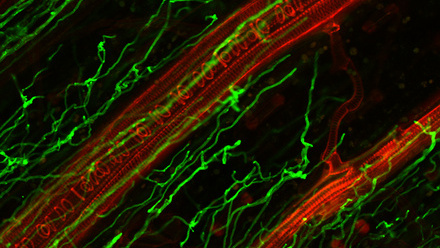
A team including members of AMI has provided a model illustrating how Pseudomonas bacteria can influence root development to promote growth and enhance the adaptation of plants under salinity stress.
Proper pasture management in the Amazon, aimed at maintaining soil vegetation cover, can reduce methane emissions from livestock farming, according to a new study analyzing emissions and microorganisms in Amazonian soil.
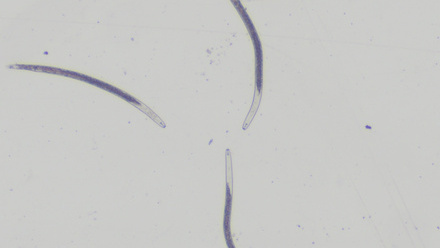
A new study has lifted the lid on five species of root-lesion nematodes living in maize crops across New Zealand - and suggested the existence of a hitherto-unsuspected cryptic species.
AMI Global Ambassador for New Zealand Tanushree Gupta is bringing an antifungal product to market that will make a huge difference to the hundreds of farms affected by facial eczema - so here’s how it’s going.
Scientists in Ecuador have developed a new method to detect and diagnose a virus that devastates crops of babaco, a fruit plant of economic importance to local farmers.
Applied Microbiology International has urged the UK government to take microbiological considerations into account when creating initiatives like the Sustainable Farming Incentive - warning that the potential benefits arising from such schemes will be limited otherwise.
Applied Microbiology International has urged the UK government to take microbiological considerations into account when creating initiatives like the Sustainable Farming Incentive - warning that the potential benefits arising from such schemes will be limited otherwise.
Innovations in technologies and practices, such as precision application, improving nutrient uptake and soil health, could lead to more efficient fertiliser use and reduce nutrient losses, according to a new report published by the UK government.