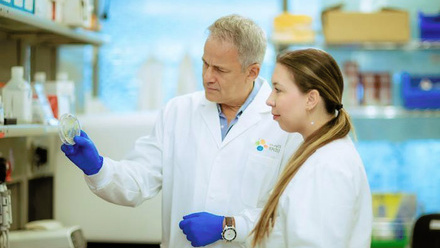
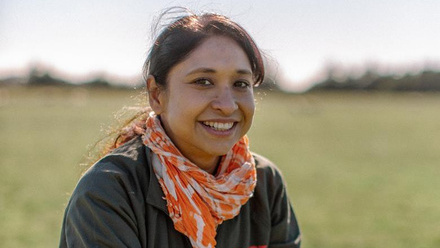
Get to know our Global Ambassador for Pakistan, Dr Arsalan Zaidi, who is Principal Scientist at the National Institute for Biotechnology and Genetic Engineering.
A new study by scientists at the NASA Jet Propulsion Laboratory and several institutes across India and Saudi Arabia - including AMI Global Ambassador Professor Alexandre Rosado - has reported 26 novel bacterial species growing inside cleanrooms associated with NASA space missions.
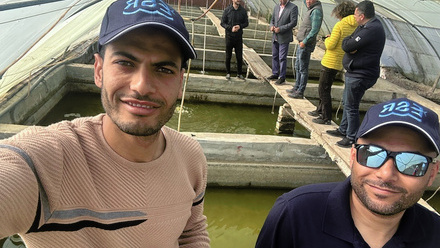
Tilapia farmers in Egypt are willing to improve welfare, but are hamstrung by gaps in training, support and resources, reveals one of the winning presentations at the recent Minoritised Life Scientists Future Forum.
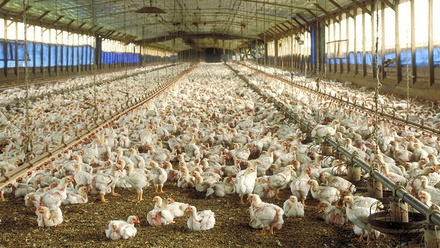
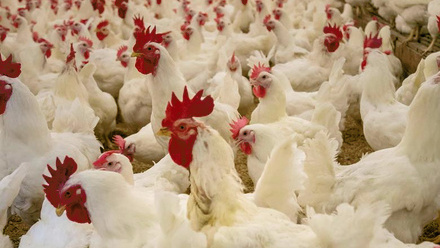
Scientists have developed a rapid, sensitive and specific test for a bacterial pathogen that is responsible for necrotic enteritis in poultry, a disease that causes billions in global economic losses annually.
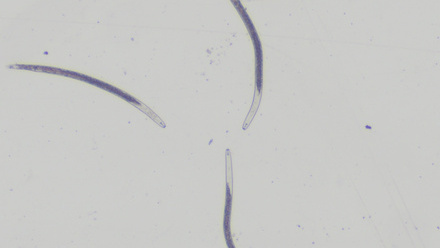
A new study has lifted the lid on five species of root-lesion nematodes living in maize crops across New Zealand - and suggested the existence of a hitherto-unsuspected cryptic species.
Dr Helen Onyeaka, an industrial microbiologist at the University of Birmingham, has been named as the newest winner of the Basil Jarvis Food Security and Innovation Award.
AMI Global Ambassador for New Zealand Tanushree Gupta is bringing an antifungal product to market that will make a huge difference to the hundreds of farms affected by facial eczema - so here’s how it’s going.
Scientists in Ecuador have developed a new method to detect and diagnose a virus that devastates crops of babaco, a fruit plant of economic importance to local farmers.
A recent review in the journal Sustainable Microbiology discusses how the use of biocides can promote well-being - but must only be used when there are clear benefits.
Applied Microbiology International has urged the UK government to take microbiological considerations into account when creating initiatives like the Sustainable Farming Incentive - warning that the potential benefits arising from such schemes will be limited otherwise.
Dr Nicola Holden, from Applied Microbiology International’s Food Security Scientific Advisory Group, reports back on the AMI conference ’The Power of Microbes in Sustainable Crop Production’, recently held at the John Innes Centre in the UK.
More than 10,000 food & drink professionals from 10 UK professional membership organisations and learned societies have teamed up to provide a single informed voice to influence and support government food initiatives, the media and inform the public.
Scientists have combined two light wavelengths to deactivate a bacterium that is invulnerable to some of the world’s most widely used antibiotics, giving hope that the regime could be adapted as a potential disinfectant treatment.